Margaret Farrell's suicide
The Thursday Murder ClubMargaret Farrell’s suicide is the buried tragedy at the center of Matthew Mackie’s account: after her pregnancy became known, she was ordered to leave, died in the chapel before she could be sent away, and was given a secret burial arrangement that bound Mackie to the loss for decades. Recounted in the Jigsaw Room, the event transforms a concealed death into a testimony about institutional silence, grief, and the bargain that determined where Maggie would rest.
The pregnancy and the order to leave
Mackie places the events in the period when he and Maggie were connected through the convent. She had confided her pregnancy to another young nun, whose identity he never learned. That confidence passed to Sister Mary, who summoned Maggie to her room at about six, after prayers. Mackie was not told what Sister Mary said. He could infer the result, however: Maggie was to pack, spend one last night at the convent, and be collected in the morning for a return to Ireland.
The arrangement gave the coming departure an appearance of order, but it left Maggie with one night before an unwanted separation. Mackie says she knew how to slip out of the dormitory. On this occasion, rather than coming to him as she had on other nights, she went to the chapel. The change in destination marks the final break in the account: the planned journey home would not be hers to make.
Her death in the chapel
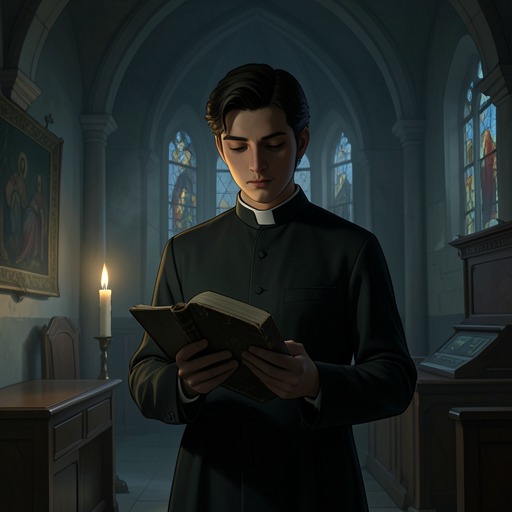
Mackie says he entered the chapel after lighting a candle and saw enough in its shadowed interior to understand that Maggie had died by suicide. She had used a rope and a beam above the altar. His recollection dwells on the uncertainty of the timing: she may have acted while he was tying his laces or while he was putting out the candle. He could not establish exactly when she died, but he understood why she had not come to him.
Mackie found no note. He raised the alarm quietly, waking Sister Mary rather than making the death a public scene. The pregnancy made the loss twofold: Maggie died, and so did the child she was carrying. Later, when the account is told in the Jigsaw Room, Elizabeth briefly supplies the fact of the pregnancy before Mackie resumes its consequences. His closing judgment is that nothing was ever fine again. The recollection therefore presents the suicide not as an isolated moment but as the event after which his life, and his sense of what could be repaired, changed.
The bargain over burial and silence
Mackie explains that his departure was part of an agreement. He was to leave without telling anyone what had happened. The Church wanted him out of the way and sought to avoid trouble and scandal; Mackie says records were destroyed and new ones made. The account of Maggie’s death was not to become the story of a priest, a pregnancy, and a suicide. He does not claim to know what explanation was ultimately given to others.
In return, he asked that Maggie be buried in the Garden of Eternal Rest. He reasoned that she would not have wanted to go home, while St Michael’s was the only other place she knew. Sister Mary agreed. Mackie also recognized that the arrangement suited her: otherwise, questions might have arisen about his sudden departure and Maggie being sent away for burial. Their bargain thus served both a private attachment and a public concealment, while securing the burial place Mackie wanted for Maggie.
Departure, return, and the delayed telling
The car meant to collect Maggie instead collected Mackie the next morning. He and the driver travelled through the day to Holyhead, and Mackie returned to Ireland. He says he stayed there, working at a teaching hospital in Kildare, until he heard that Sister Mary had died. Her grave was in the same graveyard, marked by cherubs on the headstone. On learning of her death, Mackie left his job, packed a case, and came back to stay as near to Maggie as he could.
That return gives the concealed event a long aftermath: the agreement removed Mackie from the scene, but it did not sever his attachment to Maggie or his wish to remain near her. His later account, told among the people gathered in the Jigsaw Room, makes the suppressed history speakable without undoing the years of silence. The suicide is consequently both a death and the origin of Mackie’s enduring proximity to the Garden of Eternal Rest.